Signs the clog is bigger than one fixture
Gurgling after a flush
Air is being dragged past a partial blockage. The toilet and the nearest tub or sink usually share the same branch.
Washer drain spits into the tub
Water has nowhere else to go, so it takes the lowest open path. That points below the washer standpipe.
Several drains slow at once
One shared line is restricted somewhere downstream. A plunger on a single fixture will not fix this.
Floor drain smells or burbles
A basement floor drain is often the first place a main-line clog shows itself.
A clogged drain: what is usually stuck and how it comes out
Hair and soap scum build up in bath and shower lines. Grease and food collect in kitchen lines. Wipes, paper towels and too much toilet paper catch in toilet lines. Further down, roots or mineral scale narrow the pipe from the outside in, and that kind of clog returns unless the cause is dealt with.
On arrival we ask which fixtures are affected and which one slowed first, because the order points to the branch. Then we pull the trap or open a cleanout if the layout allows it. Seeing what is in the line beats guessing, and a plain trap clog is a short job. A clog out in the buried run takes a machine, and we say which one before it goes in.
If the line clears and then stops again within days, we say so plainly. That pattern means something is wrong with the pipe itself, such as a sag or a cracked joint, and another pass with the same tool just resets the clock.
Snaking and cabling are not the same job
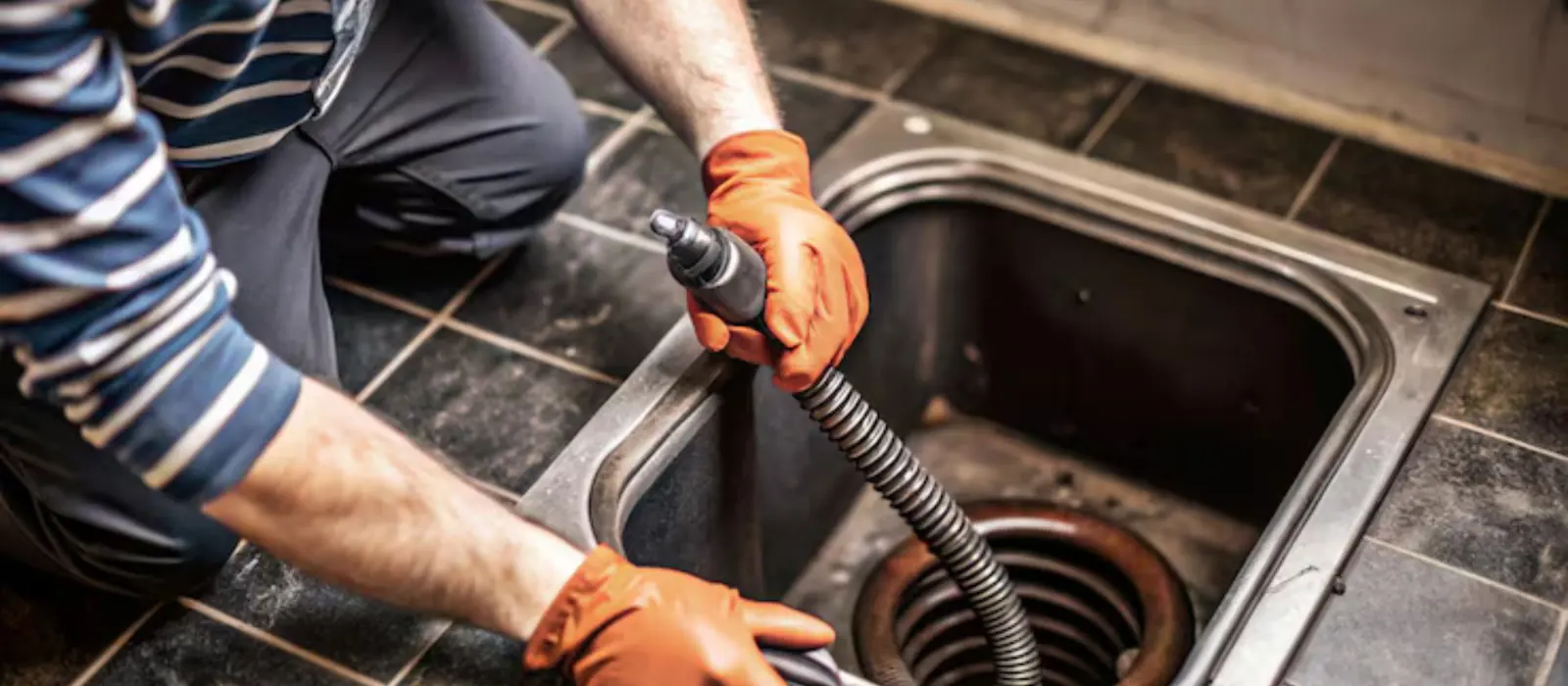
On the phone people use the two words as one, but the equipment differs. A hand or drum snake is a thin coiled steel line with a hook or auger head. It suits the 1.5 to 2 inch lines under sinks, tubs and showers, where it can turn tight bends.
A drain cable machine is a heavier cable on a motorized drum, fed through a cleanout into 3 and 4 inch lines. Cutter heads are chosen to the pipe size, and the power turns through roots and packed grease that a hand snake would only poke a hole in.
Which one we bring depends on what you describe on the phone, and we carry both. Both cut a channel and pull debris out. Neither scrubs the whole pipe wall, so a greasy line can narrow again, and hydro jetting washes the wall clean. A cable that stops at the same distance every time tells us the pipe is damaged at that spot.
When store-bought drain cleaner is a bad idea
Pouring a chemical first
- Standing water in the bowl: the product sits there and can splash back on whoever works on the drain next.
- A fully blocked pipe: the liquid pools above the clog and has nowhere to go.
- Roots or a damaged pipe: chemicals do nothing to either.
- On septic or very old pipe: ask a plumber before pouring anything.
- Mixing two products: never. The fumes can injure you.
Calling before you pour
- Tell us what you used and when, so we protect our hands and eyes when we open the trap.
- A cable or snake removes the blockage instead of dissolving a channel through it.
- If the line keeps clogging, a camera shows why.
Kitchen sink drain clogs
Kitchen lines clog on grease, and hot tap water does not fix it. Fat melts, runs a few feet downstream, cools against the cold pipe wall and sets. Layer after layer builds until coffee grounds, rice and eggshell catch on it and the sink drains slowly, then stops.
A kitchen sink that backs up into the laundry sink tells us the blockage is past the point where the two lines join. A disposal that hums while the sink stays full may have a jam, which is a different repair. See garbage disposal repair for that.
After clearing the line we check the dishwasher drain hose and air gap if one is fitted, since a dishwasher dumping into a half-blocked line can overflow onto the counter.
To slow the next clog, scrape plates into the trash, wipe greasy pans with a paper towel before washing, and keep fibrous scraps like celery and potato peels out of the disposal. Those habits matter more than any product from the store.
Shower and tub clogs, and drain line leaks
A slow tub is nearly always hair and soap wrapped around the stopper or in the trap just below. Lift the strainer and look before calling. If water also rises in the tub when a toilet flushes or the washer empties, the stoppage is in the line below, not the tub.
A leaking drain line behaves differently: it drips only while water is running, so a stain on the ceiling below a bathroom may grow after showers and dry in between. Finding the joint is a job for leak detection before anyone opens a wall.
Water coming up right now: do this first
- Stop using every fixture and turn off the washing machine and dishwasher, since they push more water into the same line.
- Do not flush. Leave the lid down and move rugs, boxes and stored items off the floor near the drain.
- If the water is dirty, keep children and pets out of it and wear boots, because floor water from a drain can carry sewage.
- Do not pour a chemical cleaner into standing water. Call the 24/7 line and tell us what you see.
What happens when you call the 24/7 line
Describe the symptom
Which fixtures, which floor, what changed today. A few answers narrow it down.
Get the price first
You hear the number for the work we propose before anyone starts. If it changes, we stop and talk.
Clear the line
Trap, snake or cable depending on the pipe. After-hours calls get the same tools as daytime ones.
Test it
We run water through every fixture on the line and tell you if a camera look is the next step.
Allendale: rental houses, student apartments and repeat clogs
About 47 percent of households in the Allendale CDP rent, and Grand Valley State University enrolls roughly 21,000 students across its campuses. Many of them share a house with one kitchen, two bathrooms and a single drain line. Grease, hair and wipes from a full house all hit the same pipe, so it is easy to see how a rental clog comes back.
Tenants: report a slow drain the day you notice it, and photograph any standing water. Landlords: note where the cleanout is, keep dates of each clog, and post a card by the toilet saying paper only. Three clogs on one line in a semester is a reason for a camera, not a fourth snaking. If you manage rentals near Jenison too, the same habit applies there.
Sources: American Community Survey 2020 to 2024 (Census), Allendale Township Master Plan, GVSU enrollment report.
What decides the price of a drain cleaning
A trap clog and a root-bound line do not cost the same. These are the things that move the number.
A fixture branch is quicker than a main drain that serves the whole house.
A cleanout is simple. If there is none, a toilet may have to come off first.
A hand snake, a drain cable and a jetter are different machines with different time on site.
Soft grease clears faster than roots or hard scale.
Nights, weekends and holidays are priced differently from a weekday visit, and you hear it up front.
Drain not clearing tonight?
Call the 24/7 line, say which fixtures are involved, and we will tell you what to do while we get to you.
Call (855) 575-2890