Water heater leak: where it comes from and what to shut off first
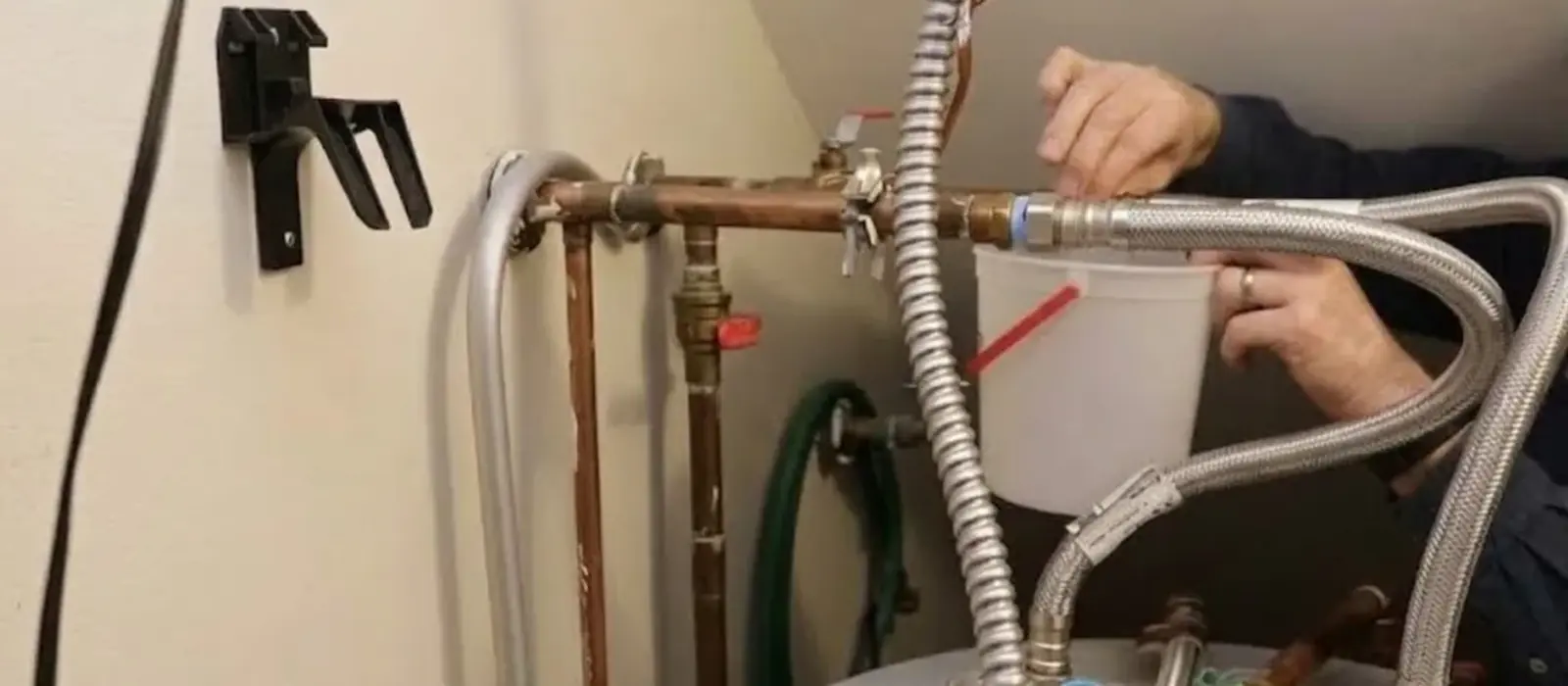
Most leaks around a tank are not the tank. Trace the water upward from the floor. The usual sources are the drain valve at the bottom, the temperature and pressure relief valve with its discharge pipe, and the hot and cold connections on top. All of these are repairable parts.
A relief valve that drips is telling you something. It opens when pressure or temperature climbs too high, so a steady drip can point to a worn valve, high household pressure or thermal expansion. Swapping the valve without finding the cause often means the new one drips too. Never cap the discharge pipe.
Water from the tank body is different. Seepage at the bottom seam, under the jacket or with rust streaks down the side means the inner steel has corroded through. That cannot be patched, and it is the point where we move to water heater replacement. Shut off first: the cold supply valve, then the breaker or the gas control. If the water turns out to come from a pipe instead, that is a burst pipe call.
Gas smell, or a carbon monoxide alarm: leave first
If you smell gas near the tank, leave the house and call the gas utility or 911 before you call a plumber. Do not relight a pilot, flip switches or look for the source. If a carbon monoxide alarm sounds, leave and call 911. We handle the water side and the repair once the house is safe.
No hot water in the house right now? Sort out which problem it is
No hot water at all usually means lost power or fuel, a tripped breaker, a dead element or thermostat on an electric tank, or a pilot that has gone out on a gas one. Lukewarm water suggests one failed element, a weak flame or a broken dip tube. Hot water that vanishes after a few minutes can mean sediment, a dead lower element or a tank that has aged out.
A cold January morning makes a marginal heater look worse, because the incoming water is colder and the heater has more to make up. If your tank has been slow all week, do not wait for it to quit. Call any hour and we will tell you whether it is a repair or time to look at the next tank, perhaps a tankless unit.
Gas, electric and heat pump hybrid: what fails and how it feels
| Type | Parts that tend to fail | What you notice | Worth knowing |
|---|---|---|---|
| Gas tank | Thermocouple or flame sensor, igniter, gas control valve, flue draft | Pilot will not stay lit, lukewarm water, a smell of gas or soot | A gas smell means leave first. Combustion and venting are checked before anything else. |
| Electric tank | Upper or lower element, thermostat, high-limit switch | No hot water, or hot water that runs out fast when one element dies | Power goes off at the breaker before anyone opens a panel. |
| Heat pump hybrid | Fan, controls, condensate drain, backup elements | Slow recovery, an error display, water from a blocked condensate line | It needs open airflow and a clear condensate path. A tight closet starves it. |
What you can check, and what to leave to a plumber
Safe to check yourself
- Is the breaker tripped, or is the gas control set to its run or pilot position?
- Is the cold supply valve fully open?
- Does only one tap run cold? That points to a fixture or mixing valve, not the heater.
- Is the puddle from the tank, or from a pipe, fixture or condensation above it?
Leave these to us
- Opening electrical panels or testing elements and thermostats
- Anything on the gas side, including repeated pilot failures and the flue
- Replacing a relief valve or changing the discharge pipe
- Steam or very hot water at the discharge pipe: stay clear and call
Rentals and student housing: what we need from the call
Allendale is a rental town. About 47% of households in the Allendale CDP rent, and Grand Valley State University reports 21,382 students across all its campuses for Fall 2026. A tank in a rented house or apartment often goes without attention until the shower turns cold.
Tenants should tell the landlord or property manager first, and say whether the tank is leaking, since that is the urgent version. Property managers should tell us who can give access and where the tank sits, because apartment units often hide it in a closet. We cover neighboring towns too, including Hudsonville.
What happens when you call
Quick questions
Fuel, rough age, where the water is, and what you have shut off.
Safe and diagnosed
We confirm no gas smell, power and water off, then test the suspect part.
Price first
You hear the repair price first, and we say if replacing is the better buy.
Repair and test
We replace the part, run the heater through a cycle, check the relief valve and look again for leaks.
Not sure if it is the heater or the plumbing?
Call and describe what you see. We will tell you whether it can wait for a morning visit or needs a night call.
Call (855) 575-2890What affects a water heater repair bill
A clear price comes before the work. We do not print dollar figures here because repairs range from a small valve to a major part, and these five things decide where yours falls.
A thermocouple or element is a smaller job than a gas control valve or a relief valve with a pressure problem behind it.
Gas, electric and hybrid units have different parts, different safety checks and different labor.
On an old tank we may advise against a repair that costs a large share of a new unit.
Corroded unions, seized shutoffs or a cramped closet add time.
A dripping relief valve may need an expansion tank or pressure fix as well, and we price that openly.