
Short answer: a minority issue here, but not a zero issue
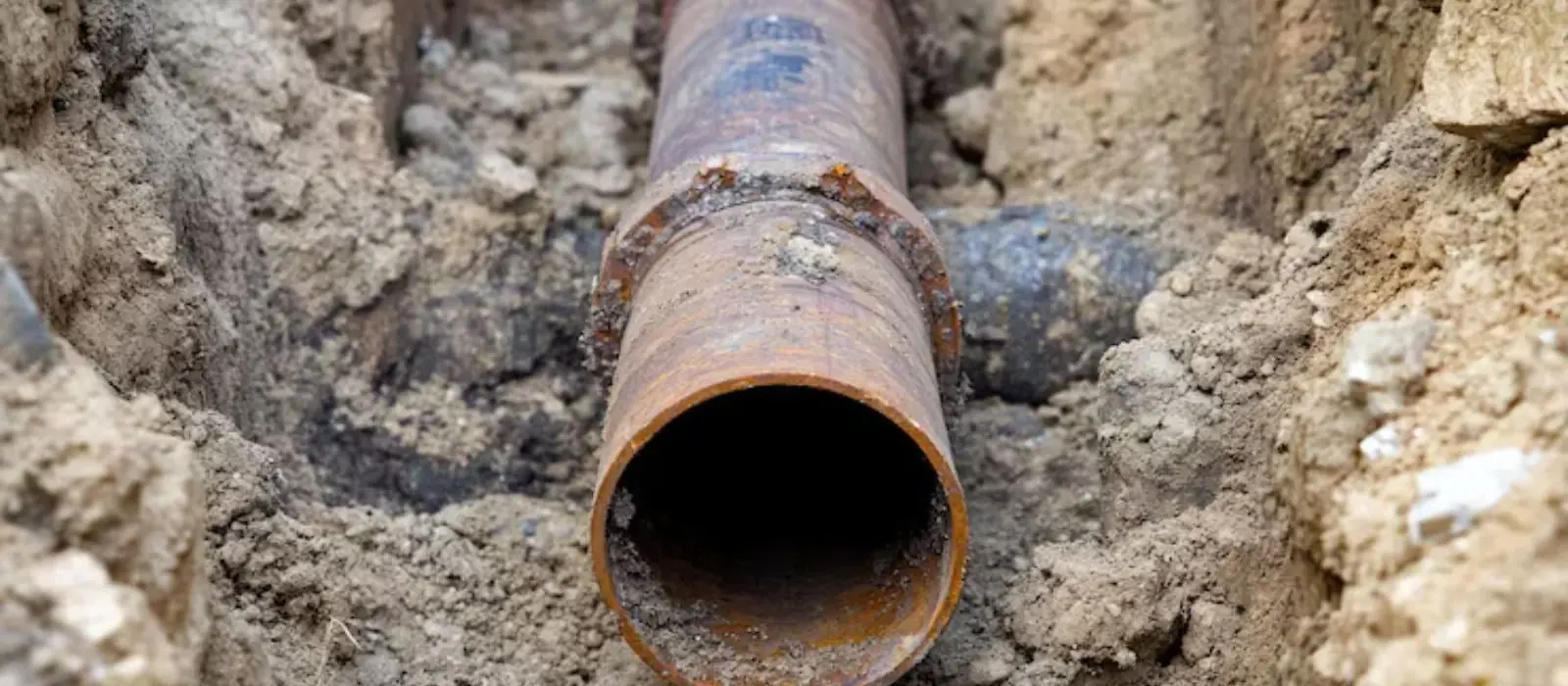
Galvanized steel supply pipe went into older houses and mostly stopped going into new ones long ago. It rusts from the inside, narrows over time and eventually leaks or starves fixtures of pressure. If your home is recent, you very likely have copper or plastic instead, and this problem is not yours.
The exceptions are older houses, farmhouses and homes where an earlier owner never updated the pipes. Those are the ones worth checking. You do not need tools to start.
Allendale, MI: a young housing stock with an older minority
Census data (American Community Survey 2020 to 2024) puts the median year built for Allendale Township homes at 2003. Of 8,454 housing units, about 1,368 (around 16 percent) were built before 1980 and 298 (3.5 percent) before 1940. Check your own build year on your closing papers or county property record, and if it falls before 1980, look at the pipes in your basement or utility room.
The township's 2025 water quality report counts 3,979 service lines and says zero are known or presumed lead. That covers the line from the main to your meter, not the pipes inside your walls. Older towns nearby do skew older: the same survey gives a median year built of 1973 for the Jenison area and 1984 for Walker, where about 45 percent of homes predate 1980.
Source: U.S. Census Bureau American Community Survey 2020 to 2024 and the Allendale Charter Township 2025 water quality report.
What you see and what it usually means
Symptoms overlap with other plumbing problems, so treat this as a set of clues rather than a diagnosis.
| Clue | What it suggests | Sensible next step |
|---|---|---|
| Gray, threaded pipe with rust-colored streaks at the joints | Galvanized steel, aging at the threads | Have a plumber look and map where it runs |
| Brown or orange water after sitting, clearing after a minute | Rust inside old steel pipe | Ask for a look at the pipe and the service connection |
| Shower or sink pressure that falls while others are fine | Pipe narrowing from buildup | Compare pressure by fixture and call about the run feeding the weak one |
| Pinhole leaks, or a leak that reappears nearby after repair | Pipe wall thinning along the run | Ask about a repiping plan before the next leak |
| Copper or white and blue plastic pipe throughout | Not galvanized | Nothing to do. Look elsewhere for pressure trouble |
Patch it or repipe it?
Repairing a single leak in galvanized pipe is often possible. The question is what is likely to fail next.
Spot repair and monitoring
- Fits when a short section has leaked and the rest is sound
- Joins old pipe to new, and old threads can fail next to the repair
- Leaves reduced flow in the remaining pipe
- Makes sense for a few more years in an otherwise stable house
Repiping
- Replaces the aging runs with new pipe
- Fits repeated leaks, bad pressure or discolored water
- Often easier to plan before a leak damages a finished wall
- Worth pricing before a sale, a remodel or a second leak
Want a plumber to confirm what is in your walls?
Call the 24/7 line. Tell us the year the house was built and what you are seeing, and we will say what to look for.
Call (855) 575-2890How to check your own pipes in five minutes
Go to the basement or utility room and find the pipe that runs from the meter to the water heater. Galvanized steel is dull gray, has threaded fittings and attracts a magnet. Copper is brown or green and does not, and plastic is white, blue or red.
Scratching a small spot with a coin on gray pipe shows silvery metal if it is galvanized. Take a picture and note how many runs look like it. That alone makes the conversation with a plumber shorter and clearer.
Do not assume that an old galvanized system is a lead problem or that a new one is safe. The water report notes that homes with a lead or galvanized service line requiring replacement may need to flush for at least 5 minutes. Ask the township utility what is on your side of the meter.
Planning a repipe and finding the leaks first
Repiping is normally planned around the house: which walls open, which fixtures are affected, and how water gets turned off during the work. A repiping estimate should list the runs that will be replaced and say what is left. Ask for the clear price before work starts.
If you are not sure whether a pressure problem or a stain comes from the pipe or from something else, leak detection can find where water is going without opening walls at random. That step often decides whether a repair is enough.
The older end looks different. A nearby city's utility runs a program to replace galvanized service lines, and the owner stays responsible for the pipes past the first valve inside the building. If you live in Walker or Jenison, ask your own utility where its responsibility ends.