
The honest answer on drain acid
Strong acid drain cleaners work by eating through whatever is in the pipe. That sounds helpful until you remember that your trap, seals and fittings are also in the pipe. The product cannot tell hair from a joint, and it does not stay where you pour it.
Most clogs are a mass of hair, soap scum, grease or paper sitting in one spot. A tool that reaches that spot and pulls the mass out does the job without touching anything else. That is why plumbers reach for tools first and chemistry rarely.
Four ways drain acid goes wrong
Burns
Splashback is the usual injury. A stubborn clog leaves the liquid sitting in the basin, and the next plunge, poke or flush can throw it at your hands, eyes or clothes.
Fumes
Chemical reactions in a standing drain can give off irritating vapor. Bathrooms and utility sinks are small and often have a weak fan, so the air turns bad fast. Children, pets and anyone with asthma feel it first.
Pipe damage
Heat and corrosion are hard on traps, rubber seals, older metal and some plastics. A cleaner that sits above a stubborn clog has more time to do harm. A pinhole leak under the sink is a worse problem than the clog that started it.
The next person
If the drain is still blocked, the acid is still in it. Whoever plunges, snakes or unscrews the trap next meets the chemical with no warning. That person is often a roommate, a landlord or a plumber.
What to try instead, in this order
None of these needs a chemical, and each one removes the clog instead of dissolving part of it.
Plunger
Use a cup plunger on a sink or tub and a flange plunger on a toilet. Block the overflow opening with a wet rag, then push steadily. Twenty seconds of firm work clears many soft clogs.
Hand auger
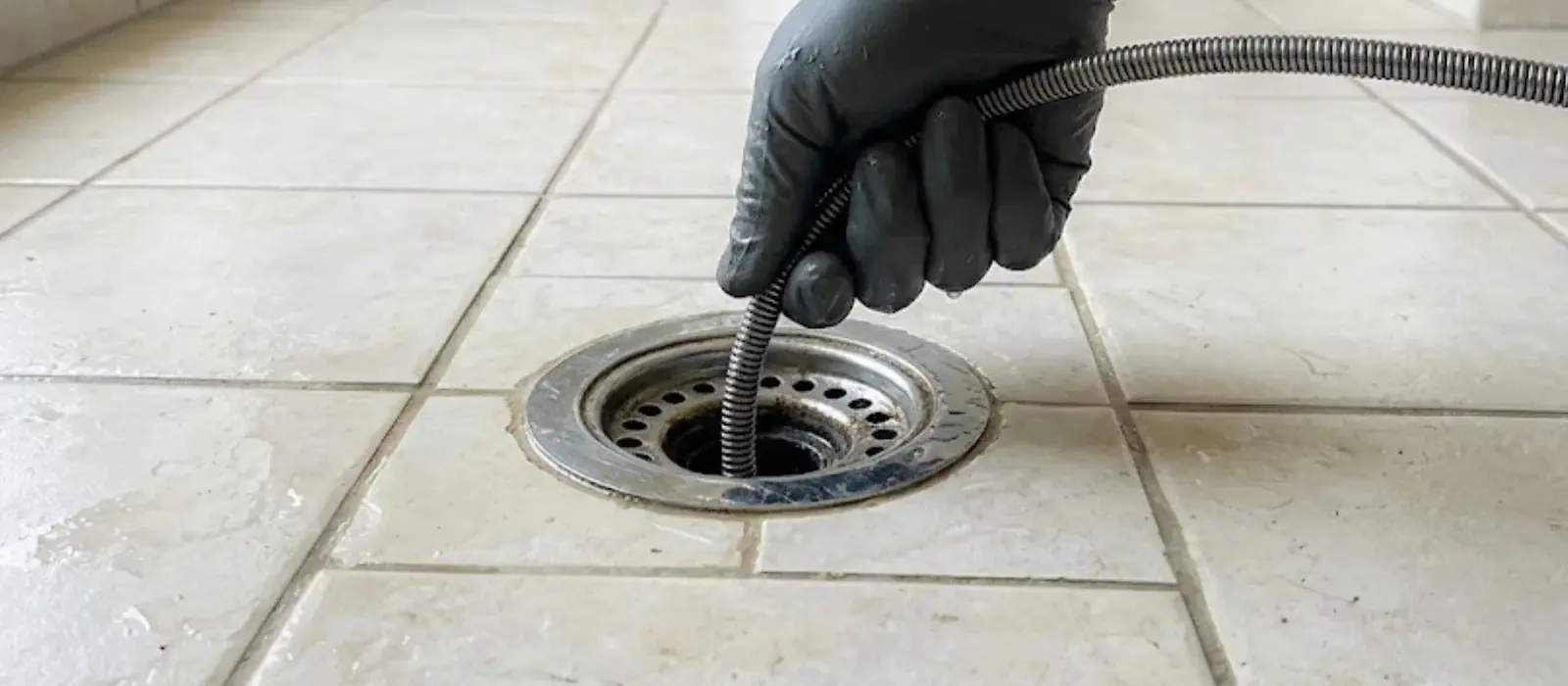
A small hand-crank drain auger reaches the hair and soap that sit a few feet in. Feed it slowly, turn the handle, and pull the clog out rather than shoving it deeper.
Enzyme or bacterial products
These work slowly on organic buildup. Use them as monthly upkeep on a drain that still runs, not as a rescue for standing water. Read the label for septic use.
Hot water on grease
A kettle of hot tap water, not boiling, can loosen a fresh grease film in a kitchen line. Boiling water can soften some plastic fittings and may just carry grease deeper to set again.
Match the fix to the clog
| What you see | Try first | Stop and call when |
|---|---|---|
| Sink drains slowly, no gurgling | Plunger, then hand auger | The auger hits a hard stop or the water returns within minutes |
| Tub or shower pools around your ankles | Lift the strainer, clear hair, then hand auger | The tub is still slow after you clear the hair |
| Toilet will not flush | Flange plunger | Water rises in another fixture when you flush |
| Several fixtures slow or gurgling | No chemicals at all | Right away, because the blockage is probably in the main line |
| Same drain clogs again within weeks | Clear it mechanically, no chemicals | Soon, because buildup or damage is deeper in the line |
Allendale, MI: township sewer or private septic changes the rules
Allendale Charter Township runs its own sewer system, with a Water Resource Recovery Facility rated for 1.6 million gallons a day, about 50 miles of sewer main and 8 lift stations. In rural parts of the township, homes rely on private wells and septic systems under the Ottawa County Health Department, and the Master Plan says municipal service will not reach the whole township in any foreseeable period.
So the first question is which system you are on. Ask the township utility whether your address is on public sewer. If you have a septic tank, ask the Ottawa County Health Department what your system can tolerate before any drain chemical goes down, because the tank depends on living bacteria. For a stubborn clog on septic, a cable or auger avoids the question.
Source: Allendale Charter Township water and sewer page and Master Plan.
Renting in Allendale? Read this before you reach for a bottle
Nearly half of households in the Allendale CDP rent, 47 percent in the Census Bureau's 2020 to 2024 ACS estimate, and many are shared houses and apartments near the GVSU campus. In a rental, a chemical poured by one tenant can reach the next tenant, the maintenance crew or a plumber without warning.
Report a stubborn clog to the landlord or property manager and say whether anything was poured in.
If acid is already in the drain
Do not plunge, snake or flush to help it along. Open a window, run the fan, keep children and pets out of the room and keep your face away from the drain. If any splashed on skin or eyes, rinse with plenty of water right away and contact poison control or emergency services.
Then tell the plumber exactly what was poured, how much and when. A drain cleaning visit for a chemical-filled line starts with protective gear and a plan. If grease or scale keeps bringing the clog back, hydro-jetting scours the pipe wall with high-pressure water, which suits repeat clogs better than any bottle.
Clog won't budge and you are not sure what is in the drain?
Call the 24/7 line and tell us what you tried and what you poured. We will sort out the safest next step and give you the clear price before work starts.
Call (855) 575-2890